Capitol Reef National Park, located in south-central Utah, is a hidden gem among Utah’s "Mighty 5" national parks. Known for its stunning geology, rich history, and fewer crowds, it offers activities for all types of visitors. From scenic drives and fruit-picking in historic orchards to hiking trails of varying difficulty, Capitol Reef has something for everyone. The park’s Waterpocket Fold, a 100-mile geologic wrinkle, and its International Dark Sky certification make it a haven for nature lovers, photographers, and stargazers. With affordable entry fees ($20 per vehicle for 7 days) and diverse accommodations in nearby Torrey, it’s perfect for a peaceful getaway.
Highlights:
Top Activities: Scenic drives, hiking, fruit-picking, petroglyph viewing, and stargazing.
Main Areas: Fruita (historic district and orchards), Cathedral Valley (remote sandstone monoliths), and Waterpocket Fold (dramatic backcountry landscapes).
Where to Eat:Gifford House (pies and baked goods) or Torrey’s restaurants like Capitol Burger Food Truck and [Hunt & Gather](Hunt & Gather).
Plan your visit during spring or fall for mild weather and blooming orchards, but be prepared for summer heat or winter serenity. Whether you’re seeking adventure or tranquility, Capitol Reef delivers a memorable experience.
Capitol Reef National Park Complete Guide: Cassidy Arch, Hickman Bridge & the Scenic Drive
Main Areas of Capitol Reef National Park
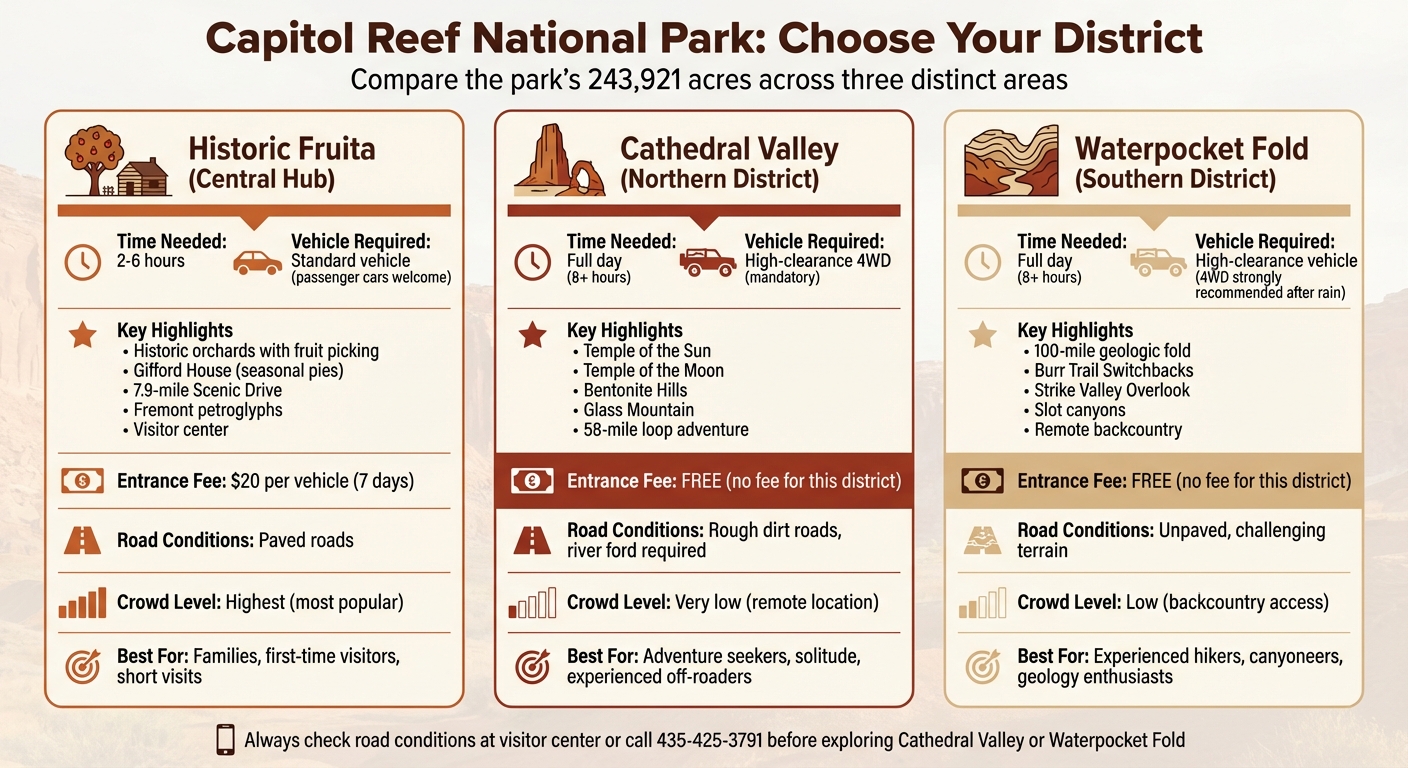
Capitol Reef National Park Districts Comparison Guide
Capitol Reef spans an impressive 243,921 acres and is divided into three distinct districts, each offering its own blend of attractions and challenges. Your choice of district will depend on your vehicle, available time, and appetite for adventure. Here’s a breakdown to help you plan your visit, whether you're after scenic drives or rugged backcountry trails [5].
Historic Fruita and the Scenic Drive
Historic Fruita is the park's central hub and a favorite starting point for most visitors. Nestled in a lush river valley, this area features the visitor center, a charming one-room schoolhouse, a blacksmith shop, and the well-loved Gifford House, where you can enjoy seasonal fruit pies. The surrounding orchards, with thousands of fruit trees, are a highlight. Visitors can pick fruit for free during harvest season (cherries in June, apricots in July, pears in August, and apples in September), though any fruit taken to-go must be weighed and paid for at self-service stations [5].
The 7.9-mile Scenic Drive begins in Fruita and takes about 90 minutes round trip. This paved route leads to iconic spots like Cassidy Arch and Grand Wash. Toward the end, it transitions into the 2.3-mile gravel Capitol Gorge Road, which offers a short walk to the Pioneer Register - a fascinating collection of names carved into the rock by settlers and miners dating back to 1871. Fruita is accessible to standard vehicles and requires the $20 entrance fee [5].
Looking for something more secluded? Head north to Cathedral Valley.
Cathedral Valley (Northern District)
The Cathedral Valley district is a remote northern area known for its towering sandstone monoliths rising dramatically from the desert floor. Landmarks like the Temple of the Sun, Temple of the Moon, Bentonite Hills, and Glass Mountain make this area unforgettable. Its isolation is a major draw for those seeking peace and untouched desert landscapes [5].
"The remote and rugged northern part of Capitol Reef offers adventurous visitors solitude and spectacular views." – National Park Service [5]
Exploring the 58-mile Cathedral Valley Loop is an all-day adventure requiring a high-clearance 4WD vehicle. The journey includes fording the Fremont River and navigating rough, dirt roads that are sensitive to wet conditions. Before setting out, it’s essential to check road conditions at the visitor center or by calling 435-425-3791. The good news? There’s no entrance fee for this district [5].
For even more rugged terrain, venture south to the Waterpocket Fold.
Waterpocket Fold (Southern District)
The Waterpocket Fold is the defining feature of Capitol Reef’s southern district. This 100-mile-long geologic wrinkle in the Earth’s crust creates a dramatic landscape of slot canyons, ridges, and remote backcountry roads. Whether you’re an experienced canyoneer or simply looking for breathtaking views, highlights include the Burr Trail Switchbacks, Strike Valley Overlook, and a variety of slot canyons.
Exploring this area, often referred to as "Looping the Fold", is a full-day endeavor requiring a high-clearance vehicle (4WD is strongly recommended after rain). The unpaved roads can be tough to navigate, but the reward is stunning scenery with few other visitors. Like Cathedral Valley, there’s no entrance fee here, but always verify road conditions before heading out [6].
To help you decide which district suits your plans, here’s a quick comparison:
District
Time Needed
Vehicle Required
Key Highlights
Crowd Level
Historic Fruita
2–6 hours
Standard vehicle
Orchards, Gifford House, Petroglyphs
Highest
Cathedral Valley
Full day (8+ hours)
High-clearance 4WD
Temple of the Sun/Moon, Solitude
Very low
Waterpocket Fold
Full day (8+ hours)
High-clearance vehicle
Burr Trail Switchbacks, Slot Canyons
Low
Best Things to Do in Capitol Reef National Park
Capitol Reef is a haven for adventure seekers and casual explorers alike. Whether you’re in the mood for a leisurely drive or a demanding hike, this park has something for everyone. With a little over 1 million visitors in 2025, it remains one of Utah’s less crowded national parks, offering plenty of room to roam and enjoy its stunning landscapes.
Drive the 8-Mile Scenic Route
The Scenic Drive, stretching 7.9 miles, is a must for anyone wanting to take in Capitol Reef’s striking geology. Starting near Fruita, this paved route takes about 90 minutes for a round trip and costs $20 per vehicle, valid for seven days [7]. The drive begins with the Fruita Rural Historic District, where you can admire historic orchards and the Gifford House.
Continuing along the route, you’ll reach Slickrock Divide, a high vantage point that separates the Grand Wash and Capitol Gorge drainages, offering sweeping views of the area.
"The Navajo Formation... white, rounded domes, reminiscent of the nation's capitol building, inspired part of the name for Capitol Reef." – National Park Service
For those feeling adventurous, two spur roads - Grand Wash Spur Road and Capitol Gorge Spur Road - lead to canyon trails and historical sites. These roads are accessible to passenger cars and RVs up to 27 feet, but keep an eye on weather conditions, as flash floods can be a concern. For up-to-date road information, call 435‑425‑3791.
If driving isn’t enough, the park offers a range of hiking trails to suit all levels of experience.
Hiking Trails for All Skill Levels
Capitol Reef’s trails cater to everyone, from beginners to seasoned hikers. Most trails start above 5,000 feet, adding a layer of challenge even to moderate routes [10]. Summer temperatures often soar above 100°F, so pack plenty of water and aim to hike during cooler parts of the day.
For an easy outing, trails like Goosenecks Overlook (0.2 miles round trip) and Sunset Point (0.8 miles round trip) provide breathtaking views with minimal effort. The Grand Wash Trail (4.4–4.8 miles round trip) offers a flat, family-friendly walk through a canyon flanked by towering 500-foot walls - reminiscent of Zion Narrows but without the water.
Moderate trails like the Hickman Bridge Trail (1.8 miles round trip) lead to a stunning natural bridge with a 133-foot span. Another favorite, Cohab Canyon (3.4 miles round trip), takes hikers through a hidden canyon with picturesque views of Fruita[10].
For more experienced hikers, Cassidy Arch (3.4 miles round trip) and the Chimney Rock Loop (3.6 miles round trip) provide rewarding but strenuous climbs. If you’re up for a full-day adventure, tackle Navajo Knobs (9.5 miles round trip) for jaw-dropping 360° views[10].
Trail Name
Round-Trip Distance
Difficulty
Key Highlights
Goosenecks Overlook
0.2 miles
Easy
Quick canyon views
Sunset Point
0.8 miles
Easy
Perfect for photography
Grand Wash
4.4–4.8 miles
Easy
Towering 500-foot canyon walls
Hickman Bridge
1.8 miles
Moderate
Natural bridge with a 133-foot span
Cohab Canyon
3.4 miles
Moderate
Hidden canyon with Fruita views
Cassidy Arch
3.4 miles
Strenuous
Dramatic arch formation
Chimney Rock Loop
3.6 miles
Strenuous
Stunning sunset views
Navajo Knobs
9.5 miles
Strenuous
Panoramic 360° vistas
See the Petroglyphs and Pioneer Register
History buffs will love exploring the park’s ancient and pioneer-era carvings. Along Highway 24, just east of Fruita, you can view Fremont petroglyphs that are about 1,000 years old. These intricate carvings depict human-like figures with triangular bodies, animals, and abstract symbols. A boardwalk makes it easy to view them, but aim for early morning or late afternoon to avoid glare. Remember: never touch the carvings, as the oils from your skin can cause lasting damage.
Another fascinating site is the Pioneer Register in Capitol Gorge. Here, you’ll find names and dates etched into sandstone by Mormon settlers, miners, and early explorers, some dating back to 1871. To visit, drive to the end of the Scenic Drive, continue 2.3 miles down the unpaved Capitol Gorge Road, and hike about a mile into the gorge. Capitol Gorge was once the main route through the Waterpocket Fold until Highway 24 was completed in 1962. Be cautious of flash floods when exploring the area.
These historical sites add depth to Capitol Reef’s natural beauty, blending stories of ancient cultures and early pioneers.
Visit the Park Visitor Center
Start your Capitol Reef adventure at the visitor center in Fruita. Here, you can grab trail maps, check road conditions, and get expert advice from park rangers. Exhibits highlight the park’s geology, Fremont Culture, and pioneer history. For families, ranger-led programs offer engaging insights, and kids can even earn a Junior Ranger badge.
Where to Stay Near Capitol Reef National Park
Whether you prefer camping under the stars or unwinding in a cozy lodge, there are plenty of options near Capitol Reef. The park itself has limited camping spots, while the nearby town of Torrey, located about 8 to 11 miles west of the visitor center, offers a variety of hotels, cabins, and other unique places to stay.
Campgrounds Inside the Park
If you're looking to camp inside Capitol Reef, Fruita Campground is your go-to spot. Open year-round, it features 71 sites near the Fremont River and historic orchards. The National Park Service calls it "an oasis within the desert" for a reason. Sites cost $25 per night, with a 50% discount for Senior or Access Pass holders. Reservations are required and can be made six months in advance through recreation.gov [13]. During the busy season (March through October), these spots fill up quickly, so booking early is a smart move. Amenities include flush toilets, potable water, picnic tables, fire rings, and an RV dump station. Keep in mind, there are no hookups, and Loop C’s bathhouse is closed from mid-November to mid-March to avoid frozen pipes.
For a more rugged experience, the park also offers two free primitive campgrounds: Cedar Mesa and Cathedral Valley. Cedar Mesa has 5 sites, and Cathedral Valley has 6, both available on a first-come, first-served basis. These spots include pit toilets but no water or other amenities [14]. Cedar Mesa is about 23 miles from the visitor center and best accessed with a high-clearance vehicle, while Cathedral Valley, over 30 miles away, requires a high-clearance 4WD. Always check road conditions at the visitor center before heading out, as rain or snow can make these routes impassable.
Here’s a quick breakdown of the camping options:
Campground
Sites
Cost
Reservations
Amenities
Vehicle Access
Fruita
71
$25/night
Required via recreation.gov
Flush toilets, potable water, fire rings, RV dump station
Passenger cars/RVs (up to 52 ft in Loop C)
Cedar Mesa
5
Free
First-come, first-served
Pit toilet, no water
High-clearance recommended
Cathedral Valley
6
Free
First-come, first-served
Pit toilet, no water
High-clearance 4WD required
Lodges and Cabins in Torrey
If you’d rather enjoy a little more comfort after a day of exploring, Torrey has a range of lodges and cabins to suit different tastes and budgets. Capitol Reef Resort, just a mile from the park entrance, offers unique options like teepees and Conestoga wagons, along with standard rooms and a pool. For a more modern vibe, the Skyview Hotel features stargazing domes with skylights, allowing you to fully appreciate the area’s Gold Tier International Dark Sky status. Another popular choice is the Red Sands Hotel, which boasts an indoor heated pool, a full-service spa, and even a yoga room.
For travelers on a budget, Motel Torrey offers a charming retro feel with its 80s/90s southwest style. RV parks like WonderLand and Thousand Lakes are also great for tent or car camping. If you're traveling with a larger group, check out The Cabins at Capitol Reef, featuring luxury A-frame structures like the Sage House, which accommodates up to 16 guests and starts at around $400 per night. Cougar Ridge, set on a farm with llamas and horses, offers private villas starting at approximately $393.75.
Keep in mind, many businesses in Torrey close during the winter months (November–February) and on Sundays, so plan accordingly. If accommodations in Torrey are fully booked, the town of Richfield, about an hour away, provides additional hotel options.
Where to Eat Near Capitol Reef National Park
Capitol Reef National Park doesn’t have full-service restaurants within its boundaries. The only food options inside the park are at the Gifford House and the Visitor Center. Most visitors turn to Torrey, a small town just 8 to 10 miles west of the park entrance - a quick 10-minute drive. Torrey offers a range of dining options, from casual food trucks to more refined farm-to-table experiences. Many places operate seasonally, typically from March to October, so it’s a good idea to call ahead if visiting during the winter months[22]. Below are some must-visit spots both inside and near the park.
The Gifford House is the park’s go-to spot for fresh-baked treats. Open seasonally from March 14 (Pi Day) through October, it’s famous for its homemade fruit pies, cinnamon rolls, ice cream, and locally made jams. With a glowing 4.7/5 Google rating, the peach and mixed berry pies are particularly beloved and often sell out during busy hours. If you’re planning a visit, arrive early, as the house closes briefly from 12:00 to 12:45 PM daily.
For a more hands-on experience, the Fruita Orchards offer a seasonal “U-Pick” program during summer and fall. With nearly 2,000 fruit trees, you can pick cherries from mid-June to early July, apricots in July, peaches and pears in August, and apples from September to mid-October. While you’re welcome to snack on fruit in the orchard for free, any fruit you take out must be weighed and paid for at a self-pay station. For the latest harvest updates, you can call the fruit hotline at 435-425-3791.
For more diverse dining options, Torrey offers a selection of restaurants just a short drive from the park.
Restaurants in Torrey
Since dining inside the park is limited, Torrey’s variety of eateries is a welcome change. The Capitol Burger Food Truck is a standout for its creative menu, including the popular “Mushroom Blue” burger made with locally sourced beef. If you’re looking for something portable, Chuck Wagon Deli and Wild Rabbit Cafe serve made-to-order sandwiches and boxed lunches, perfect for a picnic in the park. For a sit-down meal, Rock Reef Cafe offers a family-friendly menu with American, Mexican, and pizza options, while La Cueva is praised for its authentic Mexican dishes.
For a more refined experience, Hunt & Gather specializes in slow-cooked wild game and locally inspired dishes, and Rim Rock Restaurant pairs pan-seared trout with breathtaking views. If you’re up for a short drive, Boulder is home to two exceptional spots: Hell’s Backbone Grill, a farm-to-table favorite operating for over 25 years, and Sweet Water Kitchen, known for its steak. Both require reservations. For something unique, Curry Pizza in nearby Bicknell (just 15 minutes away) serves Indian-inspired pizzas like Tikka Masala and Bhinda Special.
Restaurant
Cuisine Type
Price Range
Distance from Park
Notable Features
Capitol Burger Food Truck
Burgers & Fries
$ (under $10)
~10 mins
Locally ground beef; 4.9/5 rating
Chuck Wagon Deli
Sandwiches/Deli
$ (under $10)
~10 mins
Boxed lunches; famous Reuben sandwich
Wild Rabbit Cafe
Breakfast/Lunch
$ (under $10)
~10 mins
House-baked biscuits; local eggs
Rock Reef Cafe
American/Mexican/Pizza
$ ($11–$24)
~10 mins
Family-friendly; large menu
Hunt & Gather
Fine Dining/Wild Game
$ ($25–$40)
~10 mins
Slow-cooked, locally sourced dishes
Rim Rock Restaurant
Fine Dining/Steak
$ ($25–$40)
~10 mins
Pan-seared trout; scenic views
Curry Pizza (Bicknell)
Indian/Pizza
$ (under $10)
~15 mins
Tikka Masala and Bhinda Special pizzas
Planning Your Visit to Capitol Reef National Park
Once you've explored the attractions and accommodations, careful planning will help you make the most of your trip. Capitol Reef offers a peaceful escape compared to Utah's busier parks, drawing fewer than 700,000 visitors annually - far less than Zion's millions. Spanning 243,921 acres and a 7,000-foot elevation range, this park requires thoughtful preparation [3].
When to Visit Spring (March–May) and fall (September–October) are the best times to visit, with daytime temperatures typically in the 60s and 70s°F. These seasons bring mild weather, blooming orchards, and vibrant scenery. Summer (June–August) can get hot, with highs reaching 90°F or more, but the long days are perfect for fruit picking - cherries in mid-June, apricots in July, and peaches in August. Winter (November–February) offers a serene atmosphere and clear skies for stargazing, though daytime highs usually stay between 40°F and 50°F. Keep in mind that winter lodging options are limited. With such seasonal variety, planning ahead is key.
Tips for a Smooth Visit No matter the season, a little preparation goes a long way in enjoying Capitol Reef's quiet beauty. During peak times, aim to hit trailheads before 10:00 AM. If you plan to camp, book a spot at Fruita Campground early on recreation.gov - it fills up quickly during busy months [28]. Entry to the park via Highway 24 is free. Fruita campsites cost $20 per night, while primitive camping at Cedar Mesa and Cathedral Valley is free.
FAQs
When is the best time to visit Capitol Reef National Park?
The best times to visit Capitol Reef National Park are spring (March to May) and fall (September to October). These seasons offer mild weather, with temperatures usually in the 60s to 70s °F, creating ideal conditions for hiking, sightseeing, and soaking in the park's stunning landscapes. Spring treats visitors to blooming wildflowers and flowing waterfalls, while fall provides cooler days and smaller crowds.
Summer (June to August) brings intense heat, with temperatures climbing into the 80s and 90s °F. This season also comes with a higher risk of thunderstorms and flash floods, particularly during the monsoon period. On the other hand, winter (December to February) is much quieter, with colder temperatures and occasional snow. While it’s a more serene time to explore, it’s best suited for those comfortable with the chill.
What kind of vehicle do I need to explore Capitol Reef National Park?
Capitol Reef National Park has a mix of paved and dirt roads, so the kind of vehicle you’ll need depends on your destination. The Scenic Drive, a 7.9-mile paved route, is accessible for most vehicles, including standard cars and smaller RVs. Dirt spur roads like Grand Wash and Capitol Gorge are usually manageable for standard cars and RVs up to 27 feet long, but larger vehicles might face restrictions.
Weather can be a game-changer here. Snow, ice, mud, or flash floods can make certain roads impossible to navigate or even temporarily close them. It’s always a good idea to check road conditions at the park’s visitor center or online before you set out to make sure your vehicle can handle the journey.
Are there any places to eat inside Capitol Reef National Park?
Capitol Reef National Park may not have typical restaurants inside the park, but it does have a gem worth visiting: the Gifford House Store and Museum. Here, you can treat yourself to freshly baked pies, homemade jams, and other delightful snacks - making it a must-stop spot for many visitors.
If you're looking for more dining options, head to nearby towns like Torrey, Bicknell, and Hanksville. These towns offer a range of restaurants and cafes, perfect for satisfying your appetite after a day of adventures in the park. Whether you’re in the mood for a full meal or just a quick bite, you’ll find something to enjoy.