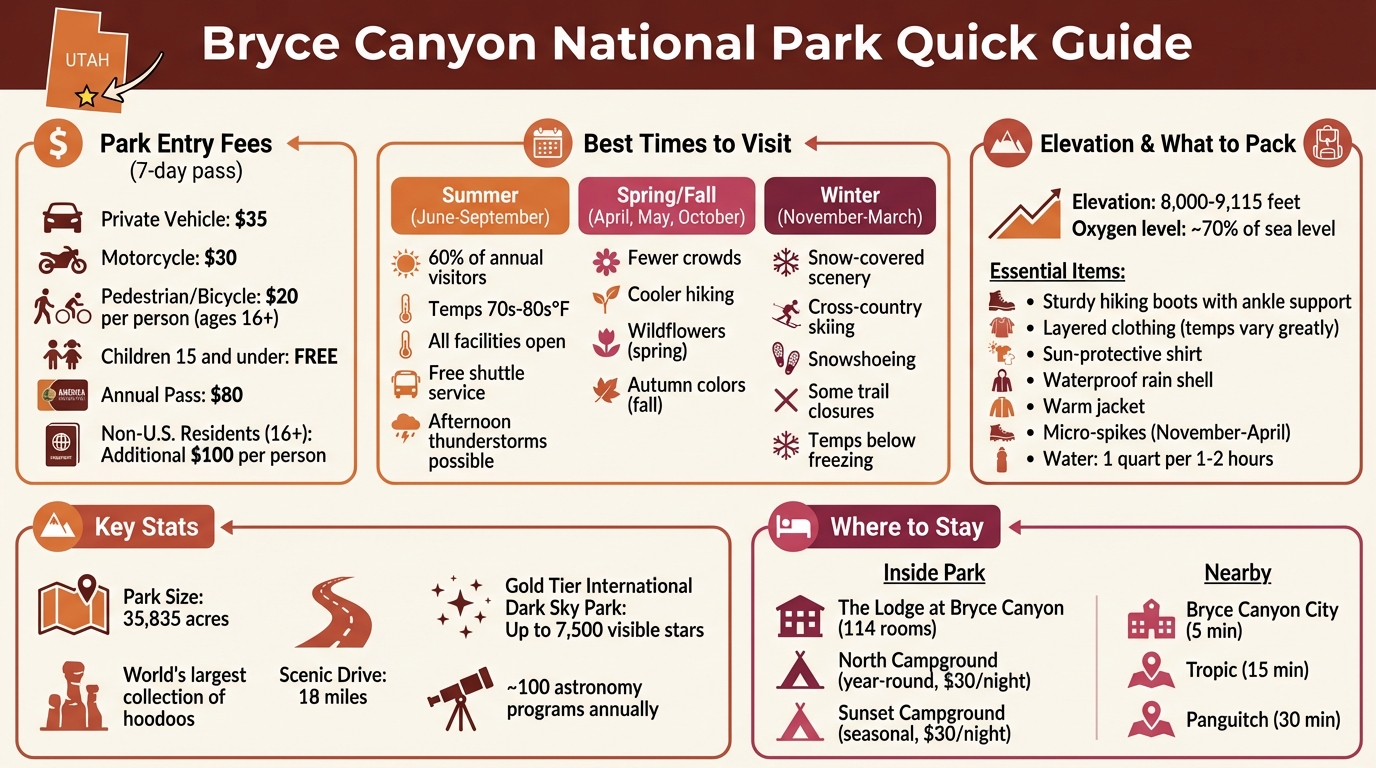
Bryce Canyon National Park is a must-see destination in southern Utah, famous for its vibrant hoodoos - the largest collection in the world. This park offers stunning views, hiking trails, and unique experiences year-round. Here's a quick rundown to help you plan your visit:
Top Activities: Hike iconic trails like the Queen's Garden or Navajo Loop, enjoy scenic viewpoints like Bryce Point, and stargaze in one of the darkest skies in the U.S.
Where to Stay: Stay at The Lodge at Bryce Canyon inside the park, camp at North or Sunset Campgrounds, or find hotels and rentals in Bryce Canyon City, Tropic, or Panguitch.
Dining Options: Enjoy meals at The Lodge's restaurant, grab quick bites at Valhalla Pizzeria, or explore nearby restaurants like Ruby's Inn and Ebenezer's Barn & Grill.
Best Times to Visit: Summer (June–September) offers mild weather and full amenities, while winter transforms the park into a serene snowy retreat.
Quick Tips:
Entrance fee: $35 per vehicle for 7 days. If you have the National Parks Pass there is no fee!
Stay hydrated, wear sturdy boots, and dress in layers due to high elevation.
Arrive early to avoid crowds and secure parking at popular spots.
Whether you're hiking, sightseeing, or simply soaking in the views, Bryce Canyon is an unforgettable experience.
Bryce Canyon National Park Visitor Guide: Fees, Best Times, and Essential Information
Best Things to Do in Bryce Canyon
Hiking Trails
Bryce Canyon offers a variety of trails, from easy strolls along the rim to more challenging routes that descend into the amphitheater. Keep in mind that the park’s elevation - over 8,000 feet - means thinner air, so it’s important to stay hydrated. Plan to drink about a quart of water every 1–2 hours [6].
The Queen's Garden Trail is a great starting point for beginners, with a 450-foot descent over a 1.8-mile round trip, leading to the iconic Queen Victoria hoodoo. For something a bit tougher, try the Navajo Loop. This 1.3-mile trail features a 515-foot elevation change and takes you past highlights like Thor's Hammer and the narrow Wall Street section (closed in winter). If you’re up for combining the two, the Queen's/Navajo Combination Loop (2.9 miles) is a favorite among visitors.
Prefer to stay above the rim? The Rim Trail connects all the major viewpoints. A paved, one-mile stretch between Sunset and Sunrise Points offers an easy, accessible walk, but the full trail stretches 11 miles from Bryce Point to Fairyland Point. For more experienced hikers, the Peekaboo Loop (5.5 miles with a 1,560-foot elevation gain) takes you deep into the hoodoos and offers stunning views of the Wall of Windows.
Make sure to wear sturdy hiking boots with good tread - lightweight shoes and sandals often lead to injuries. And if you hear thunder, head to a safe shelter immediately, as the park’s rock formations can conduct lightning [6]. For those who prefer a more relaxed experience, scenic overlooks may be more your speed.
Scenic Viewpoints
Bryce Canyon’s overlooks provide breathtaking views of its famous hoodoo formations, each offering a different perspective. Bryce Point is a must-see, especially at sunrise, when the amphitheater glows in warm hues. Inspiration Point features three viewing levels and offers panoramic views of the hoodoo-filled landscape, making it a great spot for both sunrise and stargazing.
Sunset Point, despite its name, is often best visited at sunrise to avoid the crowds while still enjoying dramatic views of formations like Thor's Hammer and the "Silent City" [7]. Meanwhile, Sunrise Point showcases features like Boat Mesa and the Sinking Ship. If you venture to Rainbow Point, the park’s highest elevation at 9,115 feet, you’ll be rewarded with expansive views - on clear days, you can see up to 90 miles, including Navajo Mountain [8].
Here’s a tip: Start your drive at Rainbow Point and work your way back, stopping at the overlooks along the return trip. This strategy can help you avoid parking headaches, especially during busy times, and everything is on the right side of the road on the way back.
Stargazing and Ranger Programs
Bryce Canyon is a haven for stargazers. As a certified International Dark Sky Park, it offers some of the clearest night skies in the country. On a moonless night, you can spot up to 7,500 stars with the naked eye, and planets like Venus and Jupiter shine brightly enough to cast shadows.
The park hosts Night Sky Telescope Programs on Friday and Saturday nights in June and July, starting at 9:45 PM at the Visitor Center. These events include a 45-minute multimedia presentation followed by 90 minutes of telescope viewing [9][11]. In total, the park offers around 100 astronomy programs each year.
For a one-of-a-kind adventure, join a Full Moon Hike. These guided walks (lasting 1–2 hours) let you experience the canyon by moonlight - no flashlights allowed. Reservations are required, and tickets are released 14 and 5 days before the hike on Recreation.gov[11].
If you’re curious about the geology behind Bryce Canyon, check out the Daily Geology Talks at Sunset Point, which last 20–30 minutes. From Memorial Day through Labor Day, guided Rim Walks explore the park’s history and wildlife. During summer and fall, the Bryce Canyon Lodge Auditorium hosts evening programs every night. The park also celebrates with annual Astronomy and Geology Festivals. Best of all, most ranger programs are included with your park entrance fee.
If you want to stay inside the park, The Lodge at Bryce Canyon is your only non-camping option. Located just steps from the canyon rim, it offers 114 rooms with several choices depending on the season:
Western Cabins (May 15–October 15): These feature two queen beds, a gas-log fireplace, and a cozy front porch.
Main Lodge Suites (March 1–November 30): These include a king bed, sleeper sofa, and a sitting room.
Sunrise and Sunset Motel Rooms (seasonal): Choose from a king bed or two queen beds, with a porch or balcony.
Each room comes equipped with a coffee maker, mini-fridge, and hair dryer. However, there’s no Wi-Fi or television in the rooms - though public Wi-Fi is available in the Main Lodge. Rates are based on double occupancy, with an extra $15.00 per night for additional guests. Check-in starts at 4:00 PM, and check-out is at 11:00 AM. Since summer (May–September) is a busy time, reservations often fill up 6–12 months in advance.
For a closer connection to nature, camping might be the way to go.
Campgrounds
Bryce Canyon offers two campgrounds: North Campground (open year-round) and Sunset Campground (seasonal, typically closed in winter). Both charge $30.00 per night for RV or tent sites, with a 50% discount for Senior or Access pass holders.
North Campground: Conveniently located near the Visitor Center and outdoor theater, it’s close to the Bryce Amphitheater. Reservations can be made up to 6 months in advance on Recreation.gov.
Sunset Campground: Situated near Sunset Point, this campground includes a group site and two ADA-accessible sites in Loop A. Reservations open 14 days in advance and can be made by calling 435-834-4771.
During shuttle season (mid-April to mid-October), campers are encouraged to use the free park shuttle, as vehicles over 23 feet aren’t allowed to park in the Bryce Amphitheater area. An RV dump station is available for $5.00, though this fee is waived for campground guests.
For an alternative, Ruby’s Inn RV Park & Campground is located less than a mile from the park entrance. With 250 sites offering full hookups, Wi-Fi, a pool, and a hot tub, it’s a great option. One visitor, Monty Waldvogel, shared:
"We had a wonderful, stay... at the campground at Ruby's Inn! It's less than a mile from the entrance to Bryce Canyon. Price is very reasonable, plus–anything you might need or want is right there…groceries, restaurants, camping supplies, gifts, laundromats-name it!"
If camping isn’t your preference, nearby towns have plenty of other lodging options.
Hotels and Vacation Rentals Nearby
For those who prefer the convenience of a hotel, Bryce Canyon City is just five minutes from the park entrance and offers full shuttle service. Popular options include Ruby’s Inn and Best Western Plus Bryce Canyon Grand, which make it easy to explore the park without much hassle.
The nearby town of Tropic (about 15 minutes away) offers a mix of bed-and-breakfasts, family-run motels, and vacation rentals, often at competitive prices. If you’re looking for something a bit different, glamping options near Tropic and Cannonville - like modern domes, yurts, and safari tents - combine comfort with stunning dark-sky stargazing.
For a more budget-friendly option, Panguitch, located about 30 minutes from the park, features motels and restored inns. No matter where you stay, remember to pack warm layers for those chilly high-elevation mornings, even in the middle of summer.
Where to Eat Near Bryce Canyon
After exploring Bryce Canyon's awe-inspiring hoodoos, you'll need to recharge. Whether you prefer a sit-down meal in the park or a casual bite in nearby Bryce Canyon City, there's something for every appetite.
Dining Inside the Park
The Lodge at Bryce Canyon Restaurant is the main dining spot within the park. Its spacious 180-seat dining room serves breakfast, lunch, and dinner. Prices range from $16.50 per adult for breakfast ($10 for kids 12 and under) to $14–$18.50 for lunch, and $17.50–$47.75 for dinner. Highlights include regional dishes like elk chili (a hearty white bean chili made with ground elk and beef) and the Prickly Pear Margarita. Seating is first-come, first-served - no reservations required [20].
For a quicker option, check out Valhalla Pizzeria & Coffee Shop, located near the Lodge. They serve pizza, salads, pastries, and espresso drinks. Another convenient choice is the General Store near Sunrise Point, offering grab-and-go items like hot dogs, sandwiches, and ice cream - perfect for hikers and campers. Keep in mind that most dining spots inside the park are seasonal, so verify their hours before your visit.
Restaurants in Bryce Canyon City
Just 1.5 miles from the park entrance, Ruby's Inn features two dining options. Cowboy's Buffet & Steak Room offers hearty Western-style meals with a buffet option, while Canyon Diner serves quick bites like burgers, pizza, and bratwurst. Both are great for refueling before or after your canyon adventures.
For a more unique experience, head to Ebenezer's Barn & Grill, where you can enjoy live Western music alongside your dinner during the summer. Tickets cost $26–$32 and include dishes like ribeye steak, BBQ chicken, or salmon. Another local favorite is The Pines Restaurant, located at the Bryce Canyon Pines Motel a few miles west. Known for its generous "cowboy size" portions, it’s especially famous for its homemade pies, including banana–blueberry and boysenberry varieties.
If you're up for a short drive (15–20 minutes) to Tropic, treat yourself to upscale dining at Stone Hearth Grille, where you can enjoy stunning canyon views alongside dishes like grass-fed beef fillet and grilled pork chops. For something more laid-back, IDK Barbecue specializes in slow-cooked brisket, pulled pork, and sweet chicken served in a casual outdoor setting.
Planning Your Visit to Bryce Canyon
Best Times to Visit
Around 60% of Bryce Canyon's annual visitors arrive between June and September[24]. Timing your visit thoughtfully can help you dodge the crowds and make the most of the park's weather. During summer, daytime temperatures usually range from the 70s to 80s°F, all park facilities are fully operational, and the free shuttle service runs regularly. However, be prepared for the possibility of afternoon thunderstorms. If you'd prefer quieter trails and cooler hiking conditions, plan a trip in April, May, or October. These months also bring added beauty, with spring wildflowers and autumn leaves enhancing the scenery.
In winter, the park takes on a serene, snow-covered charm, perfect for activities like cross-country skiing and snowshoeing. Keep in mind that some areas, like Fairyland Point and Paria View, along with sections of the Navajo Loop Trail, may be closed due to snow. Temperatures often drop below freezing from October through May[3], so make sure to pack appropriately for the cold.
What to Pack
With elevations ranging from 8,000 to 9,115 feet, Bryce Canyon's thinner air has only about 70% of the oxygen available at sea level[2]. This makes proper preparation essential. Sturdy hiking boots with lug traction and ankle support are a must - unsuitable footwear is one of the top reasons for rescues and injuries in the park. Avoid wearing sport sandals or trainers, as they aren't suited for the park's steep, gravelly trails.
Layered clothing is another key to staying comfortable. Summer nights can be chilly, and snow is possible at any time of year. Essentials include a sun-protective shirt, a waterproof rain shell, and a warm jacket. If you're visiting between November and April, traction devices like micro-spikes are highly recommended for icy trails. Always check the weather forecast before your trip and adjust your packing list to ensure you're prepared for Bryce Canyon's high-altitude conditions.
Park Entry Fees
Bryce Canyon has gone cashless, so bring a credit or debit card for entry fees. A private vehicle pass costs $35 and is valid for seven consecutive days[25]. Motorcyclists pay $30, while pedestrians and bicyclists are charged $20 per person (children 15 and under enter for free). If you’re planning to visit several national parks within the year, the $80 America the Beautiful Pass is a great option.
Non-U.S. residents aged 16 and older must pay an additional $100 per person unless they have an annual pass. To save time at the gate, you can purchase passes in advance on recreation.gov. The park also offers free admission on select days in 2026, including:
February 16 (Presidents Day)
May 25 (Memorial Day)
June 14 (Flag Day/President Trump's birthday)
July 3–5 (Independence Day weekend)
August 25 (110th Birthday of the National Park Service)
September 17 (Constitution Day)
October 27 (Theodore Roosevelt's birthday)
November 11 (Veterans Day)
Once you've sorted out your entry pass, you're all set to experience the breathtaking beauty of Bryce Canyon.
Conclusion
Bryce Canyon National Park is a natural marvel, boasting the largest collection of hoodoos in the world[4]. Spanning 35,835 acres of high-altitude wilderness, with elevations climbing above 9,000 feet, it offers a refreshing retreat from the desert heat. Visitors are treated to breathtaking views of vibrant rock formations in shades of orange, pink, and red, creating a landscape that feels almost otherworldly.
From hiking the famous switchbacks of the Navajo Loop to catching the first light at Inspiration Point or stargazing in this Gold Tier International Dark Sky Park, Bryce Canyon delivers unforgettable moments. It’s no wonder millions of people visit each year. With its mix of accessible trails, stunning overlooks along the 18-mile scenic drive, and activities like guided horseback rides, the park has something for everyone.
To make the most of your trip, plan ahead: arrive early to beat the crowds, dress in layers for changing temperatures, carry plenty of water, and have $35 ready for the park entrance fee.
Whether you stay at the historic Bryce Canyon Lodge, camp under the stars, or explore nearby dining options, thoughtful preparation will help you fully enjoy this one-of-a-kind destination.
FAQs
What are the best viewpoints to visit in Bryce Canyon National Park?
Bryce Canyon National Park boasts several awe-inspiring viewpoints that highlight its one-of-a-kind landscapes. Bryce Point is a standout, offering expansive views of the Bryce Amphitheater and its famous hoodoos. For early risers, Sunrise Point is the perfect spot to watch the morning light bring the canyon to life. Meanwhile, Sunset Point delivers breathtaking scenery in the late afternoon and evening, making it a go-to destination for photographers. Inspiration Point lives up to its name with dramatic panoramas and is also a fantastic location for stargazing after dark.
These viewpoints are conveniently accessible via the park’s scenic drive or nearby trails, making it easy to capture incredible photos and create lasting memories.
How do I reserve a spot for the Full Moon Hike at Bryce Canyon National Park?
To join the Full Moon Hike at Bryce Canyon National Park, head to the park's official booking platform. Reservations become available in two phases: 14 days and 5 days before each hike. Both phases open at 10:00 AM Eastern Time (8:00 AM Mountain Time). These spots tend to fill up fast, so it's a good idea to reserve as early as possible.
Once you've secured your spot, make sure to arrive at the designated meeting point - typically the Visitor Center or another specified location - on time. Check in at least 10 minutes before the hike begins. Wear sturdy hiking boots with solid traction, dress for the weather, and bring water to stay hydrated. Get ready to experience the magic of Bryce Canyon illuminated by moonlight!
When is the best time to visit Bryce Canyon for stargazing?
The ideal time for stargazing at Bryce Canyon is on clear nights during a new moon. This phase offers the darkest skies, making the stars and the Milky Way look absolutely stunning. While summer is a favorite season for many due to its milder evening temperatures, winter nights can deliver equally impressive clarity - just be ready to bundle up against the cold.
To make the most of your visit, keep an eye on the local weather and moon phases ahead of time to catch the best possible stargazing conditions.