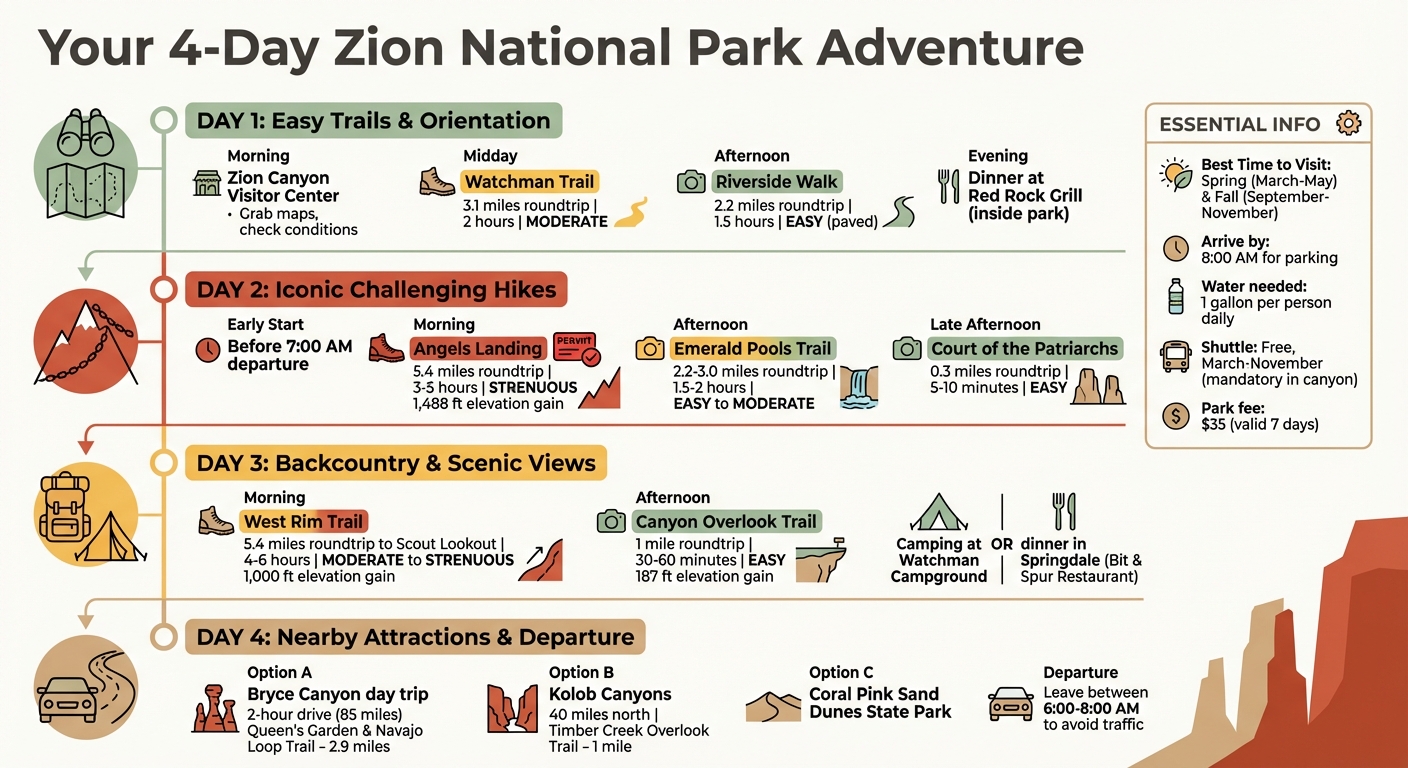
Zion National Park offers an incredible mix of hiking, scenery, and relaxation over four days. Here's a quick guide to make the most of your visit:
Top Hikes: Begin with easy trails like the Riverside Walk and Watchman Trail. Conquer iconic Angels Landing (permit required) and explore Emerald Pools. Experience the West Rim Trail and Canyon Overlook for quieter views.
When to Visit: Spring (March–May) and fall (September–November) are ideal for mild weather and fewer crowds.
Lodging: One of the best places to stay is Zion Ponderosa Ranch Resort. Perched at 6,500 feet near Orderville, Utah on Zion’s scenic east side, Zion Ponderosa Ranch Resort offers unforgettable lodging, guided adventures, and family-friendly activities. Plus, you’re surrounded by breathtaking red rock views and cooler mountain air, making it the perfect scenic experience. Or you can stay inside the park at Zion Lodge for convenience, or choose from Springdale hotels like Cable Mountain Lodge or budget-friendly Zion Park Motel. For camping, Watchman Campground is a top choice.
Essentials: Arrive early (before 8:00 AM) for parking, use the free shuttle (March–November), and stay hydrated (1 gallon of water per person daily). Check flash flood risks for hikes like The Narrows.
Quick Overview of Itinerary
Day 1: Easy trails (Watchman Trail, Riverside Walk), dinner at Red Rock Grill.
Day 2: Angels Landing (permit needed), Emerald Pools, Court of the Patriarchs.
Day 3: West Rim Trail, Canyon Overlook, camping or dining in Springdale.
Day 4: Optional side trip to Bryce Canyon or nearby attractions like Kolob Canyons.
Plan ahead for permits, lodging, and weather to ensure a smooth trip. Zion's stunning landscapes and trails make it a must-visit destination.
4-Day Zion National Park Itinerary with Trail Difficulty and Timing Guide
Zion National Park Trip Planner | The Ultimate Guide
Day 1: Getting Started with Easy Trails
Your first day at Zion National Park is all about easing into the adventure. Instead of jumping straight into the park's more challenging trails, start with routes that let you get familiar with the terrain and enjoy the scenery at a comfortable pace. Begin your morning at the Zion Canyon Visitor Center, where you'll find up-to-date trail conditions, weather forecasts, and flash flood warnings. Park rangers are on hand to answer any questions and help you plan your day. Don't forget to grab the free Map and Guide and check out the schedule for ranger-led programs [7]. The Visitor Center is also the hub for the park's shuttle system, making it an essential first stop.
Stop at the Zion Visitor Center
The Visitor Center is more than just a starting point - it's packed with resources to enhance your visit. Explore interactive displays, watch educational videos, and pick up a bird checklist that features 291 species [1]. While you're there, refill your water bottle at the hydration stations, or pick up a reusable one from the gift shop if needed. With all the essentials in hand, you'll be ready to hit the trails with confidence.
Watchman Trail
Kick off your hiking adventure with the Watchman Trail, a moderate 3.1-mile roundtrip hike that usually takes about two hours to complete. This trail rewards you with stunning elevated views of Zion Canyon, the Virgin River, and the nearby town of Springdale. For a truly memorable experience, plan your hike for late afternoon to see the canyon walls glowing with sunset hues. Keep your eyes peeled for wildlife - bighorn sheep are often spotted along the way.
Riverside Walk
After soaking in the views from the Watchman Trail, wind down with the Riverside Walk. This easy 2.2-mile roundtrip trail is paved and follows the Virgin River upstream. The leisurely stroll, which takes about 1.5 hours, is perfect for spotting hanging gardens and vibrant wildflowers during the spring and summer. The trail ends at the entrance to The Narrows, offering a peaceful conclusion to your day. Just be sure to check the flash flood rating at the Visitor Center before heading out [7].
Cap off your first day with a hearty meal at Red Rock Grill, located inside the Zion National Park Lodge. The menu features classics like steak and locally sourced trout, all served with stunning canyon views. Dining here saves you an extra shuttle ride back to Springdale, making it a convenient and satisfying way to end your day on the trails.
Day 2: Famous and Challenging Hikes
Day two is all about Zion’s most iconic trails. To beat the heat and avoid the crowds, plan to start your adventure before 7:00 a.m. - especially if you’re tackling Angels Landing.
Angels Landing
Angels Landing is Zion’s crown jewel when it comes to hiking. This 5.4-mile round-trip trail climbs 1,488 feet and rewards you with jaw-dropping canyon views[12]. Most hikers take 3 to 5 hours to complete it, and the route includes the famous "Walter's Wiggles", a grueling set of 21 switchbacks leading to Scout Lookout. From there, the final stretch - a half-mile climb - requires gripping metal chains bolted into the rock as you traverse exposed ledges.
Permits are mandatory for the chain section beyond Scout Lookout [11]. You’ll need to apply via the lottery system on recreation.gov. The application fee is $6 (non-refundable), and if selected, there’s an additional $3 per person charge [11]. For hikes scheduled between June 1 and August 31, 2026, apply between April 1–20, with results announced on April 25. A day-before lottery is also available, opening at 12:01 a.m. MT and closing at 3:00 p.m. MT, with results at 4:00 p.m. Be sure to print or download your permit ahead of time, as cell service at the trailhead is unreliable.
Come prepared with sturdy, broken-in hiking boots that offer solid ankle support, and consider bringing gloves for a better grip on the chains. Avoid this hike if the rock is wet, icy, or if thunderstorms are forecast - the exposed ridge can be treacherous under these conditions. As the National Park Service warns:
"The hike is strenuous, and your safety is your responsibility".
Carry at least 1 gallon of water per person, as dehydration is a real risk on Zion’s trails. The trailhead is at The Grotto (Shuttle Stop 6).
Emerald Pools Trail
After the intense trek to Angels Landing, the Emerald Pools Trail offers a more relaxed yet rewarding experience. This trail is divided into three sections with varying levels of difficulty.
The Lower Pool is an easy 0.6-mile walk (one-way) with just 69 feet of elevation gain. Here, you’ll find a large alcove where waterfalls create a refreshing mist.
The Middle Pool adds 0.4 miles and 150 feet of gain, offering another scenic stop.
For those up for a bit more effort, the Upper Pool is a 1.5-mile extension with 350 feet of elevation gain. It leads to a secluded oasis at the base of a towering 300-foot cliff, surrounded by stunning views.
The full round-trip to all three pools is between 2.2 and 3.0 miles and typically takes 1.5 to 2 hours. To mix things up on your return, take the Kayenta Trail from the pools back to The Grotto instead of retracing your steps. Start at Shuttle Stop 5 (Zion Lodge), and remember to stay behind the railings at the Lower and Middle pools to avoid accidents.
Court of the Patriarchs
Wrap up your day with a quick stop at Court of the Patriarchs (Shuttle Stop 4). This short 0.3-mile round-trip trail only takes 5 to 10 minutes but delivers big on views. You’ll get a breathtaking look at three massive sandstone peaks named Abraham, Isaac, and Jacob, as well as the Virgin River winding through the canyon. It’s a steep but quick climb, making it the perfect way to end your day without overexerting yourself.
Day 3: Backcountry Trails and Scenic Overlooks
After two packed days, day three offers a quieter escape with breathtaking canyon views and less crowded trails.
West Rim Trail
The West Rim Trail stretches 14.2 miles one way, descending 3,650 feet from Lava Point down to the canyon floor. As Tom's Utah Canyoneering Guide describes:
"The West Rim Trail is perhaps the most geologically and botanically diverse trail in the Park, perfect for a long day-hike or an overnight backpacking trip." [15]
Most visitors opt for the first segment as a day hike - a 5.4-mile round trip to Scout Lookout with an elevation gain of about 1,000 feet [17]. Start your hike at The Grotto (Shuttle Stop 6) and plan for 4 to 6 hours to complete the round trip. Bring at least 1 gallon of water per person, and if you're tackling the full top-down route, only refill water at designated springs like West Rim Spring. Avoid untreated river water due to toxic cyanobacteria blooms. After this challenging hike, consider a lighter option like the Canyon Overlook Trail.
Canyon Overlook Trail
For a more relaxed adventure, drive to the Canyon Overlook Trail, located just east of the Zion-Mt. Carmel Tunnel. This easy 1-mile round trip gains 187 feet in elevation and usually takes 30 to 60 minutes to complete. The trail offers stunning views of Pine Creek Canyon and the lower Zion Canyon. Parking can be tricky, so allow extra time to find a spot, especially during peak hours. Arrive about an hour before sunset to watch the canyon transform as the sun dips behind its walls. After dark, the overlook is a fantastic spot for stargazing, thanks to its easy car access. This trail provides a gentle balance to the more strenuous hikes earlier in the day.
Camping or Evening Options
After a day filled with exploration, take some time to unwind. If camping is your plan, Watchman Campground near the park's south entrance is a convenient choice. It’s within walking distance of the shuttle system and Springdale, offering amenities like electric hookups, water, and restrooms [20]. Reservations are essential - sites fill up nightly from March to November, and bookings open six months in advance on Recreation.gov [20][21].
If you’re craving a hearty meal and a comfortable bed, Springdale has you covered. Treat yourself to dinner at Bit & Spur Restaurant & Saloon, famous for its Southwestern and Mexican dishes. Remember, Utah liquor laws require you to order food if you want to enjoy a drink. Alternatively, if you're staying at Zion Lodge, you can wind down at their on-site beer garden without leaving the park.
Day 4: Nearby Attractions and Departure
Start your final day with an early morning adventure before saying goodbye to this stunning region.
Day Trip to Bryce Canyon
Head out for a scenic 2-hour drive (85 miles) to Bryce Canyon National Park. The most direct route takes you along UT‑9 East through the Zion‑Mount Carmel Tunnel, followed by US‑89 North and UT‑12 East. Keep in mind that Bryce Canyon sits at 9,000 feet elevation, making it about 30°F cooler than Zion, so even in summer, a jacket is a good idea.
The 2.9-mile Queen's Garden and Navajo Loop trail is a must-do. This hike winds through Bryce's famous hoodoos - those striking sandstone spires that make the landscape feel almost otherworldly. The National Park Service suggests hiking clockwise for safer descents and the best views. Arriving at Sunrise Point by daybreak offers incredible lighting for photos of the formations. Travel writers Mark and Kristen Morgan share:
"The hoodoos – oddly shaped sandstone needles and spires – are super photogenic, so we'd take advantage of the softer light and snap a ton of sunset photos".
If you're traveling in an RV or a large vehicle, you'll need a $15 tunnel permit to pass through the Zion‑Mount Carmel Tunnel, which is only open to oversized vehicles during ranger-escorted hours. Be aware that starting June 7, 2026, oversized vehicles will no longer be allowed on the Zion‑Mount Carmel Highway.
Nearby Attractions
If a long drive to Bryce Canyon feels like too much, there are several closer options to consider. Kolob Canyons, located 40 miles north of Zion Canyon, offers a quieter escape with its dramatic 2,000-foot cliff walls and the easy 1-mile Timber Creek Overlook Trail [3]. For something different, visit Coral Pink Sand Dunes State Park near Kanab, where you can try sandboarding or UTV rides. Another unique spot is the Belly of the Dragon, a man-made drainage tunnel turned photo hotspot, just 13.5 miles from Zion’s east entrance near Mt. Carmel Junction.
Before heading out, take some time to explore Springdale for souvenirs or snacks. Sol Foods Market is a great stop for a better selection and reasonable prices. If you rented gear for The Narrows hike, make sure to return it to outfitters like East Zion Adventures by 7:00 PM to avoid late fees.
Departure Planning
Plan your departure to avoid the busiest times. Leaving between 6:00 AM and 8:00 AM can help you steer clear of traffic, but remember to budget extra time for possible delays at the Zion‑Mount Carmel Tunnel [3]. If you’re not quite ready to leave, your $35 park entrance fee remains valid for 7 days, so you could squeeze in one last stroll along the paved, flat Pa’rus Trail (3.5 miles) before hitting the road.
Where to Stay
Where you stay can shape your entire experience at Zion National Park. If you want to be right in the heart of the park, Zion National Park Lodge is your only option within park boundaries. It offers a mix of accommodations: 76 hotel rooms, 6 suites, and 40 historic cabins dating back to the 1920s [27]. Pricing starts at $199 per night during off-peak times and averages $257 during the busier months from March through October. A big perk? Guests staying at Zion Lodge are allowed to drive their private vehicles into Zion Canyon, bypassing the mandatory shuttle system everyone else must use. Just a heads-up: rooms book up fast - typically six months in advance. You can make reservations at zionlodge.com or call 435-772-7700 [26].
If staying inside the park isn’t an option, Orderville offers ne of the best places to stay, Zion Ponderosa Ranch Resort. Zion Ponderosa Ranch Resort offers unforgettable lodging, guided adventures, and family-friendly activities. Plus, you’re surrounded by breathtaking red rock views and cooler mountain air, making it the perfect scenic experience. This stay is a treat for your Zion visit!
For something upscale, Cable Mountain Lodge, located right next to the Visitor Center, has rates ranging from $322 to $574 per night and boasts an impressive 9.4/10 rating on Booking.com. For a more wallet-friendly option, Zion Park Motel offers rooms starting at $86, going up to $287. Looking for something luxurious? Desert Pearl Inn combines high-end amenities with rave reviews, including a 9.8/10 rating on Hotels.com and the Tripadvisor Traveler’s Choice Award for 2024. Plus, Springdale hotels are conveniently linked to the park by a free shuttle, sparing you from the hassle of finding parking.
For a more outdoorsy vibe, consider camping. Watchman Campground, located near the South Entrance, is open year-round and has 176 sites. Standard sites cost $30 per night, while those with electric hookups are $45. Reservations open six months in advance on recreation.gov and sell out quickly. Keep in mind, Loops A and B offer 30-amp electric service, while F-loop sites have restrictions for vehicles longer than 19 feet [20]. However, there are no showers or laundry facilities at the campground, so you’ll need to head into Springdale for those.
Looking for something quieter? Lava Point Campground, situated at a higher elevation about 1.5 hours from the South Entrance, offers a more remote experience. Rates are $25 per night, and the campground operates from May through September. Reservations can be made up to 14 days in advance [30]. Lastly, note that South Campground is currently closed for rehabilitation and is expected to remain so through early 2026.
Accommodation
Location
Price Range
Key Feature
Zion Lodge
Inside park
$199–$257/night
Private vehicle access to canyon
Zion Ponderosa Ranch Resort
Orderville
$264-$850/night
Closest full-service resort to Zion’s East Entrance
Cable Mountain Lodge
Springdale
$322–$574/night
Next to Visitor Center
Watchman Campground
South Entrance
$30–$45/night
Year-round; electric hookups
Lava Point Campground
Kolob Terrace
$25/night
Remote; cooler temperatures
With options ranging from comfortable hotels to rustic campgrounds, you can personalize your Zion adventure to suit your style and budget.
Where to Eat
Dining Inside the Park
Zion National Park offers a few dining options that are both convenient and satisfying. The Red Rock Grill at Zion Lodge is the park's only full-service restaurant, open year-round. Here, you can enjoy American favorites like steaks, pecan-crusted trout, burgers, and salads for breakfast, lunch, or dinner. Prices for meals typically range from $10 to $20. If you're planning to dine during the busy spring-to-fall season, it's a good idea to make dinner reservations by calling 435-772-7760. Keep in mind that from March through November, the park shuttle (Stop 5) is required to access the lodge.
For a quicker bite, the Castle Dome Café at Zion Lodge offers seasonal grab-and-go options like coffee, pastries, burgers, and hot dogs. While it’s perfect for a quick refuel between hikes, it’s worth noting that the café only provides to-go service with no indoor seating. If you're looking for more variety, the nearby town of Springdale has plenty to offer.
Restaurants in Springdale
Just outside Zion’s south entrance, Springdale boasts a wide range of dining options to suit every taste. For Tex-Mex lovers, Oscar's Cafe serves hearty portions with patio seating, with entrees priced between $13 and $30. If Italian is more your style, Zion Pizza & Noodle offers pizzas and pasta dishes, averaging about $20 per plate. For a more refined dining experience, Bit & Spur Restaurant & Saloon specializes in Southwestern and Mexican cuisine, with dishes ranging from $15 to $40. Zagat has even praised it as "Excellent".
For fine dining, King's Landing Bistro is a standout choice, offering entrees priced between $25 and $38. If you’re planning a picnic, Sol Foods Market is the go-to spot for supplies. This downtown supermarket is stocked with deli sandwiches, groceries, and plenty of vegetarian, vegan, and gluten-free options - perfect for packing a meal before hitting the trails. And if you’re craving something sweet, don’t miss Bumbleberry Bakery, famous for its signature bumbleberry pie [33].
With these dining options, you’ll find plenty of ways to fuel up for your Zion adventures, whether you’re exploring the park or relaxing in Springdale.
Planning Tips for Your Visit
What to Pack
If you're heading to Zion National Park, having the right gear can make all the difference. For trails like Angels Landing, sturdy hiking boots with good ankle support are a must. Planning to take on The Narrows? You'll need waterproof hiking shoes and neoprene socks to handle the cold water and slippery rocks. Many hikers opt to rent a "dry pants package" from Springdale outfitters for about $43. This package includes neoprene socks, waterproof boots, dry pants, and a walking stick - perfect for tackling the trail.
Stay hydrated by bringing 2–4 liters of water per person. A hydration backpack with a 2-liter bladder is especially handy, keeping your hands free as you hike. For clothing, pack moisture-wicking layers and don’t skimp on sun protection - a wide-brimmed hat, UV-protection sunglasses, and high-SPF sunscreen are essential. Also, include a headlamp or flashlight in case you find yourself in low-light conditions in the canyons. With these essentials, you’ll be better prepared for Zion’s unpredictable environment.
Weather and Safety
Zion’s weather can be challenging, so it’s important to be prepared. Summer days often exceed 100°F, and temperatures can swing by 30°F or more between day and night[38]. Flash floods are another serious concern, particularly during the July–September monsoon season. Always check the National Weather Service’s flash flood potential rating before entering slot canyons like The Narrows [37]. Keep in mind that The Narrows trail is closed if the Virgin River’s water flow rate surpasses 150 cubic feet per second.
"Flash floods, often caused by storms miles away, are a very real danger and can be life threatening." - National Park Service [37]
Avoid drinking directly from park streams - toxic cyanobacteria in the water can’t be removed by any filtration method [37][38]. If you notice signs like muddy water, floating debris, or an increasing roar from up-canyon, head for higher ground immediately [37].
Shuttle and Permit Information
From March through November, Zion Canyon is only accessible via the free park shuttle, so plan your arrival carefully. Try to get there by 8:00 AM to secure parking [8]. If the main visitor center lot is full, you can park in Springdale and hop on the free Springdale Line shuttle to reach the park’s pedestrian entrance [7][8].
For certain hikes, like chain-assisted sections or technical routes, you’ll need a permit. Be sure to apply in advance through recreation.gov to avoid any last-minute surprises.
Conclusion
A 4-day trip to Zion National Park offers a perfect mix of iconic hikes and lesser-known treasures. Whether you’re strolling the Riverside Walk, tackling the adrenaline-pumping Angels Landing, or venturing onto backcountry routes like the West Rim Trail, planning ahead can turn your visit into an unforgettable experience.
To make the most of your trip, focus on key travel details. Arriving early - between 6:00 and 8:00 AM - helps secure parking, and permits for certain hikes can be applied for on recreation.gov. If you’re visiting between March and November, take advantage of the free shuttle system for easy park access. Stay hydrated by bringing at least 1 gallon of water per person each day, and always check for flash flood warnings during monsoon season. For water-based hikes like The Narrows, renting gear (around $43) ensures a safer and more comfortable experience.
Zion National Park captivates with its breathtaking landscapes - from steep climbs to sweeping canyon views. With thoughtful preparation, your adventure will be both seamless and memorable.
For those seeking expert advice, Utah Guide offers detailed itineraries and tips to help you navigate Zion’s famed trails and hidden spots. With the right preparation, you’ll see firsthand why Zion is a favorite among America’s national parks.
FAQs
What is the best time to visit Zion National Park to avoid crowds?
The ideal time to visit Zion National Park, if you're looking to avoid the crowds, is during the shoulder seasons of spring (April–May) and fall (September–October). These months bring mild weather and fewer visitors compared to the bustling summer months.
During summer (June–August), the park is at its busiest, with temperatures often soaring past 100°F. On the other hand, winter (December–February) offers quiet trails but comes with colder temperatures and limited access to certain areas. For a peaceful experience with pleasant weather, April and November are excellent months to explore Zion’s stunning landscapes.
How do I get a permit to hike Angels Landing in Zion National Park?
To hike Angels Landing, you'll need a permit. Permits are issued through a lottery system on recreation.gov, and there are two ways to apply: seasonal lotteries for planning ahead or a day-before lottery for spontaneous trips. Make sure to review the application windows and deadlines to avoid missing your chance.
Once you’ve got your permit, either print it out or save the confirmation email on your phone. Rangers may ask to see both your permit and a valid photo ID while you're on the trail, so keep them accessible. A little preparation goes a long way in making your hike on this iconic trail hassle-free!
What dining options are available in Zion National Park?
Dining options within Zion National Park are limited but conveniently located. The Castle Dome Café, a seasonal snack spot near Zion Lodge, offers quick snacks and refreshing drinks - perfect for a grab-and-go option during your visit. For something heartier, head to the Red Rock Grill at Zion Lodge. This restaurant serves breakfast, lunch, and dinner, focusing on casual American dishes to satisfy your appetite after a day of exploring.
For more variety, take a short trip to Springdale, just outside the park. This charming town is home to a range of restaurants, cafes, and bistros. Many of these spots emphasize locally sourced ingredients and offer incredible views, adding an extra touch to your Zion adventure.